Driving advice
Driving with a baby in the car
Explore the legal ways you can drive a family or friend's car
Ryan Barham
Last updated: 09/06/2026
Ryan Barham
Last updated: 09/06/2026
Driving with babies and children can be both an exciting and unnerving experience. While the first time you take a baby home is the start of a new life, further travels can be exciting adventures to places further afield.
When driving with kids of all ages, you need to prepare for the unexpected. Anything can happen, from unexpected toilet breaks to sudden bursts of singing, so it’s important you keep your eyes on the road and help everyone stay safe and calm.
Before setting off, you should ensure your car is clean, tidy and comfortable. It is also worth performing basic maintenance checks including topping up your fluids and ensuring wheels are up to standard. Nobody wants to be stuck waiting on the side of the road with bored, cold and hungry children.
There are considerations about how long you should drive for:
This is because car seats are not designed for long trips. Newborns cannot support their head and car seat angles restrict airways and breathing. Taking regular breaks can minimise the risk of injury.
You can get safety carry cots that can be installed into a vehicle’s Isofix system. These can keep babies more comfortable, but it’s still important to let everyone stretch and move on a regular basis - especially those younger children.
Naturally, you will take extra care during the first few weeks with a new child but it’s important to fully prepare.
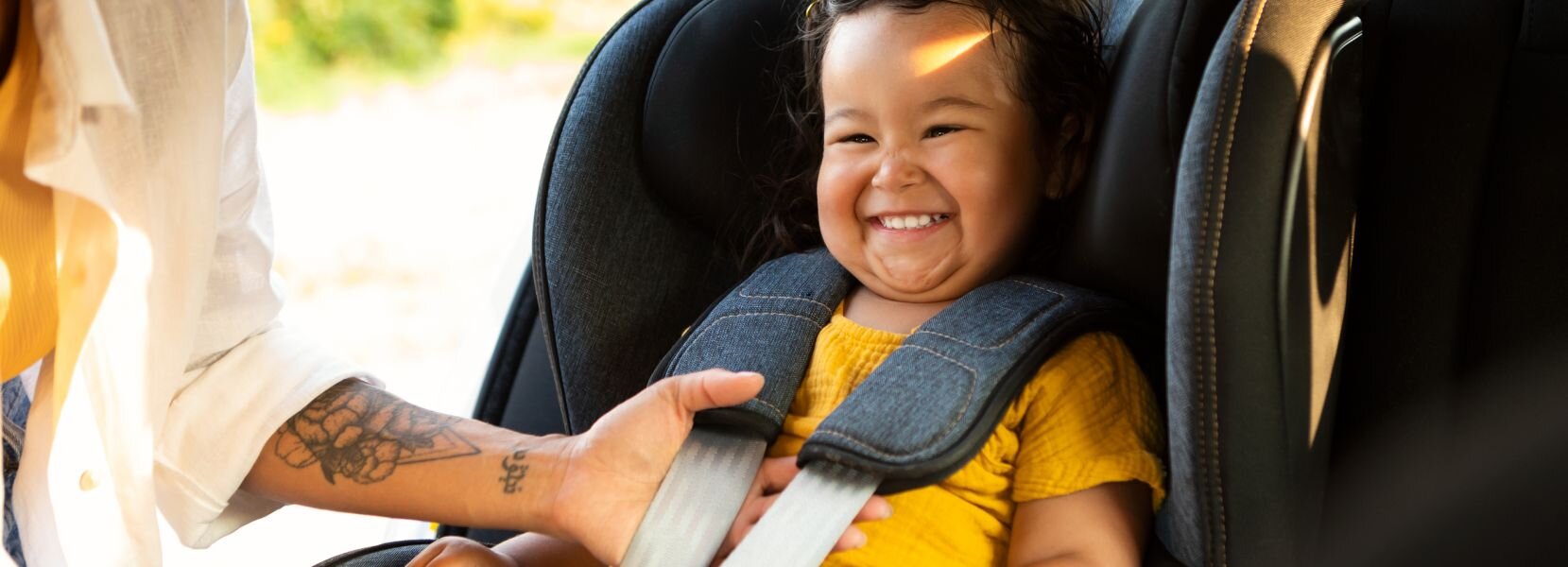
Get a car seat suitable for their weight and height and practise installing it and taking it in and out of the car, so you are prepared for any quirks. Refer to the manufacturer’s instructions if you have any issues.
Remove any bulky clothing such as coats so that you can secure the strap at or below the baby’s shoulder level. Buckle the baby up tight and pull the harness, leaving a finger’s width between the strap and the body.
Healthcare professionals advise against driving for at least 6 weeks if you have had a C-section.
The safest place for a car seat is in the rear passenger seat. Newborns should be placed in a rear-facing seat, and never in the front passenger seat when the airbag is on.
The NHS says: ‘It is dangerous and illegal to carry a baby in a rear-facing baby seat in a front passenger seat that has an active airbag. Forward-facing seats in the same position, while not illegal, are not ideal. It's always safer for children to travel in the back of the car.’
You can find out more about car seat laws in our blog post.
When driving with children, you may be looking for some reassurance. A good baby car mirror can do this.
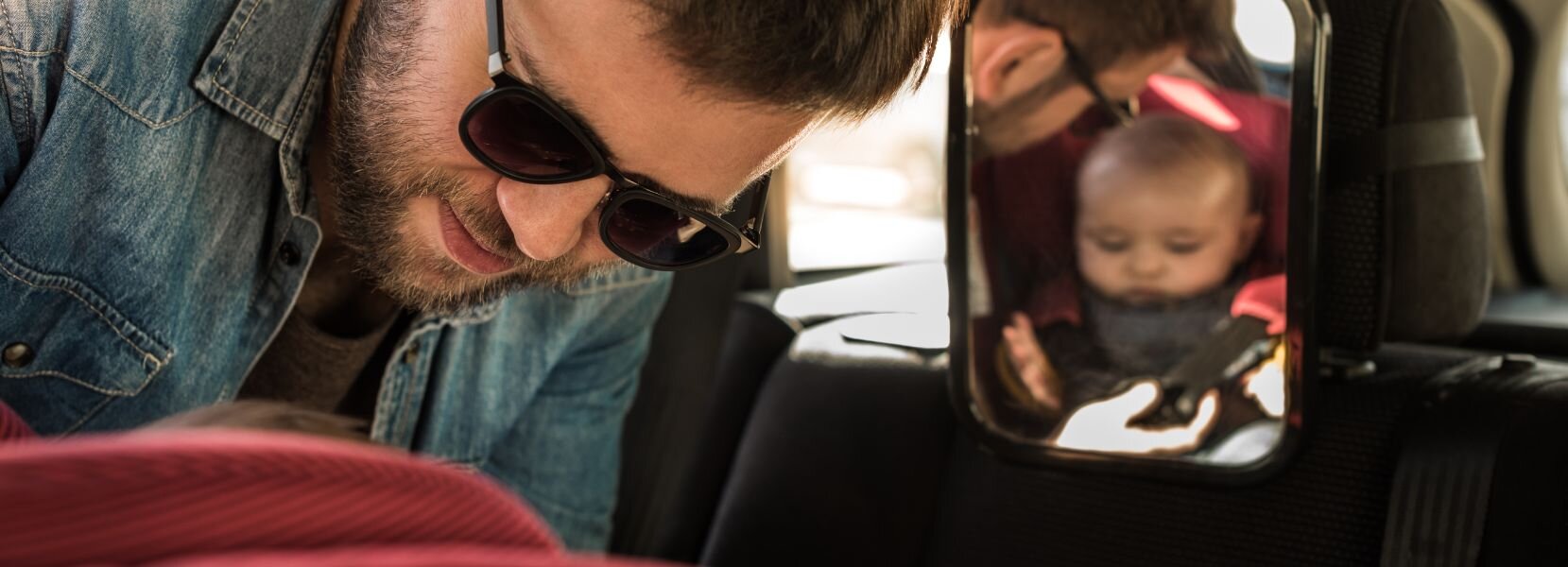
A purpose-built car seat mirror gives you the chance to see your little one in your car’s rear-view mirror while you’re driving. You can check whether they’re asleep, awake or in distress - making it easy to know when you need to stop.
There are a range of baby car mirrors on the market, some with extras like toys and lights to entertain the child and help you see them while driving in the dark. The majority are easy to install, with straps keeping them secure and you can also angle them for the perfect view.
A well-placed sunshade can also help protect their eyes and avoid glare.
There might be more preparation than you expect when it comes to travelling by car with babies and/or children - even for the shortest journeys.
When travelling with a newborn, you can align your drives with sleep schedules, but make sure you have packed everything you need for when they wake up:
You can keep a grab bag with many of these as they grow older, especially spare clothes and first aid kits. You could also bring spare drinks and snacks, but be careful of choking while eating on the move.
As children get older, they may start to fidget and get bored. Maybe it’s time to start bringing in some family games to your car journeys?
From books and tablets filled with favourite shows to screen-free entertainment and audiobooks or playlists of sing-along songs, there are plenty of options for keeping kids entertained - just make sure the driver keeps their eyes on the road.
Prepare for anything when driving with kids. If they’re younger, check their temperature and wrap them up in a blanket if they’re too cold. Ensure the car itself is at a comfortable temperature, too.
Plan your route and stop for regular breaks. If you have a passenger who is happy to stay in the back of the car and entertain the kids, definitely consider their kind offer. If you want to take turns playing with the kid, why not share the drive with temporary car insurance?
Remember, it’s illegal and unsafe to have a baby on your lap while the car is in motion and this could land you with a £100 fixed fine, increasing to £500 if it goes to court.
Most importantly, never leave the baby or child alone in the car.
https://www.carwow.co.uk/editorial/driving-rules-and-laws/road-safety/tips-for-driving-with-a-baby
https://www.ageas.co.uk/solved/your-car/driving-advice-for-new-parents/
https://www.besafe.com/en/safety-tips/tips/going-home-from-maternity-ward/
https://www.gov.uk/child-car-seats-the-rules/when-a-child-can-travel-without-a-car-seat
https://www.nhs.uk/baby/first-aid-and-safety/safety/choosing-a-baby-car-seat/
https://thebumptobabychapter.co.uk/driving-your-new-baby-home-from-hospital/
https://www.lullabytrust.org.uk/baby-safety/baby-product-information/car-seats/
We also currently hold an ‘Excellent’ rating on Trustpilot with over 50,000 reviews.